GRAVURES.I.DESSINS.I.INSTALLATIONS.I.SÉRIGRAPHIES.I.AUTRES.I.EXPOSITIONS.I.PARCOURS.I.CONTACT.I.INDEX
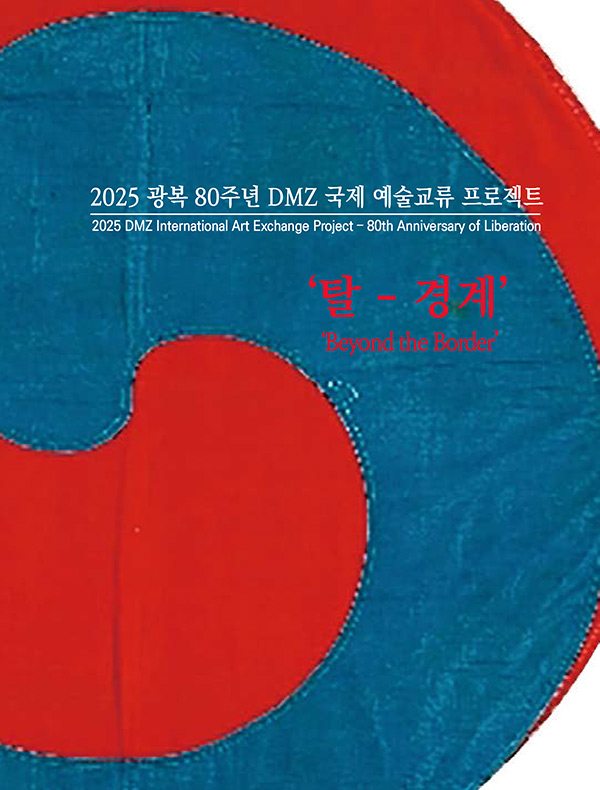
BEYOND THE BORDER / ‘탈 - 경계’ 2025 DMZ International Art Exchange Project – 80th Anniversary of Liberation
Goseong DMZ Museum.
Goseong Unification Observatory
Corée
du 1er au 30 septembre 2025
In 2025, as we commemorate the 80th anniversary of Korea’s liberation, the Korean Peninsula continues its journey toward freedom and peace—an ongoing pursuit that remains unfinished. Liberation, though achieved eight decades ago, still stands as an “incomplete story.” The joy of independence was soon followed by the tragedy of division, and this dual history has deeply permeated the consciousness and lives of our people. The 80th Anniversary of Liberation DMZ International Art Exchange Projectseeks to reflect on that unfulfilled liberation and, together with artists from around the world, to explore the possibilities of peace and reunification through artistic dialogue. It aims to serve as a stage for reimagining historical wounds and time itself, and for questioning the universal values shared by humanity. This project builds upon the Berlin Peace Projectheld in Germany in 2023, born from the artistic solidarity between Germany and Korea—two nations that share experiences of division and reunification. Just as the fall of the Berlin Wall symbolizes, the dissolution of borders is not merely a physical act but also an inner transformation of the human spirit. Art becomes the emotional language that ignites that transformation, and through this exhibition, we strive to converse with the world in that language. Eighty artists from Korea and abroad present works in painting, installation, performance, and poetic theater, all grounded in the shared theme of peace on the Korean Peninsula and in the world. Their works go beyond visual expression; they are temporal records that embody memories of division, the sensibility of borders, and aspirations for unity. The barbed wire, the landscape of the DMZ, the muted voices, and the silent languages are reinterpreted into new meanings, inviting the audience to experience the act of “crossing boundaries.” Among the outdoor installations, participatory works such as “Faith Can Bridge the Divide”allow visitors of all ages to engage physically and emotionally with the meanings of liberation and de-bordering. The performances and poetic theater pieces, blending body, language, space, and emotion, offer a sensory experience of unity and reconciliation. This project thus becomes a multidisciplinary arena where visual art, performance, and literary language converge—proposing an alternative vision of peace that transcends the realities of division. In a world still scarred by war and conflict, the Korean Peninsula remains a vast stage for experimenting with the idea of a “future peace.” Through the memories of Berlin and the participation of 80 international artists, this exhibition expands the “boundaries of Korea” into a global concern. Art, as a borderless language, conveys a message of peace to citizens of the world. “There is no good war, nor bad peace.”Art delivers that simple truth most deeply and quietly.On this 80th anniversary of liberation, we ask again through art:What does true liberation mean?And what kind of peace do we dream of? May this exhibition mark a small beginning toward answering those questions,and may peace—both on the Korean Peninsula and in the world—be rewritten in the language of art.